
Written By: Alysha Webb
Parts and service—often referred to as fixed operations—account for around half of a dealership’s gross profit. You’d expect that to mean dealerships keep a close eye on parts inventory. Unfortunately, that’s not always the case.
A lack of understanding of the reconciliation process, combined with poor communication between the parts and accounting departments, can lead to major discrepancies between the actual parts on hand and what’s recorded in the General Ledger (GL).
In a recent webinar, Mark Payne, President and CEO of Total Dealer Solutions, and Ken Rosenfield, CPA, founder and partner at Rosenfield and Co., drilled down the critical do’s and don’ts of parts reconciliation.
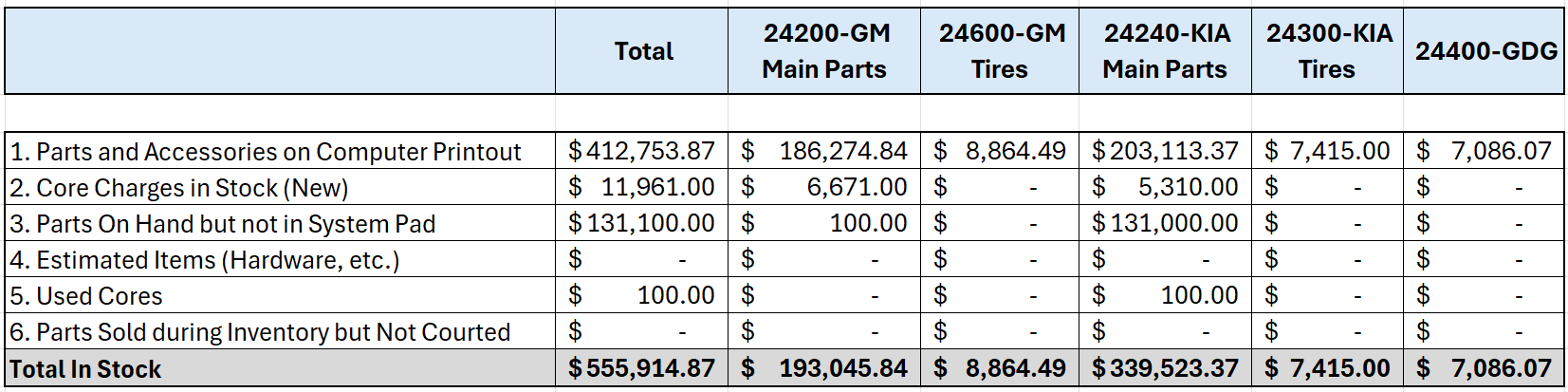
When performing an inventory reconciliation to accounting, it’s important to break out the inventory pad values according to their respective General Ledger accounts, Payne explained. To determine the total in stock, parts should be broken into categories including:
“Without such detailed categories, there will be overlapping accounts,” Payne warned.
The PAD value is a count of the actual physical parts listed by part number, location, quantity on hand, unit cost, core unit cost, and the extended value of the part. Payne noted that this value can move independently of the General Ledger.

Another important area to consider: Work in Progress (WIP). This includes the body shop, service, counter tickets, and closed repair orders not yet posted in accounting. Open counter tickets are a red flag, Payne emphasized.
The minute the part leaves the department, that counter ticket should be closed and billed out.
Mark Payne, President and CEO of Total Dealer Solutions
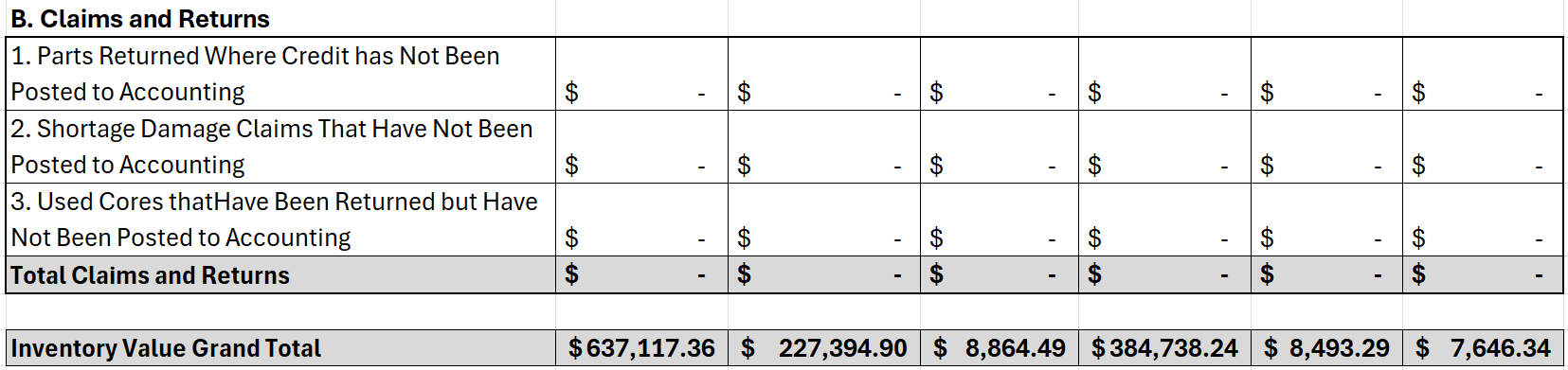
Add claims and returns to the WIP and PAD values to arrive at Total in Stock.
Once outstanding invoices are factored in, that total can be compared to the General Ledger. Payne recommended choosing a cutoff date for reconciliation—typically near the start of the second week of the month, when parts statements have usually been reconciled and invoice issues are minimal.

The adjusted General Ledger value is then compared to the physical inventory values previously arrived at. Then appreciation and depreciation must be considered.
“That’s a big thing right now, especially with tariffs,” Payne said. “There have always been price changes, but there are even more now—and they can be large.”
His advice? Dealerships should book appreciation monthly to ensure price changes are accurately captured.
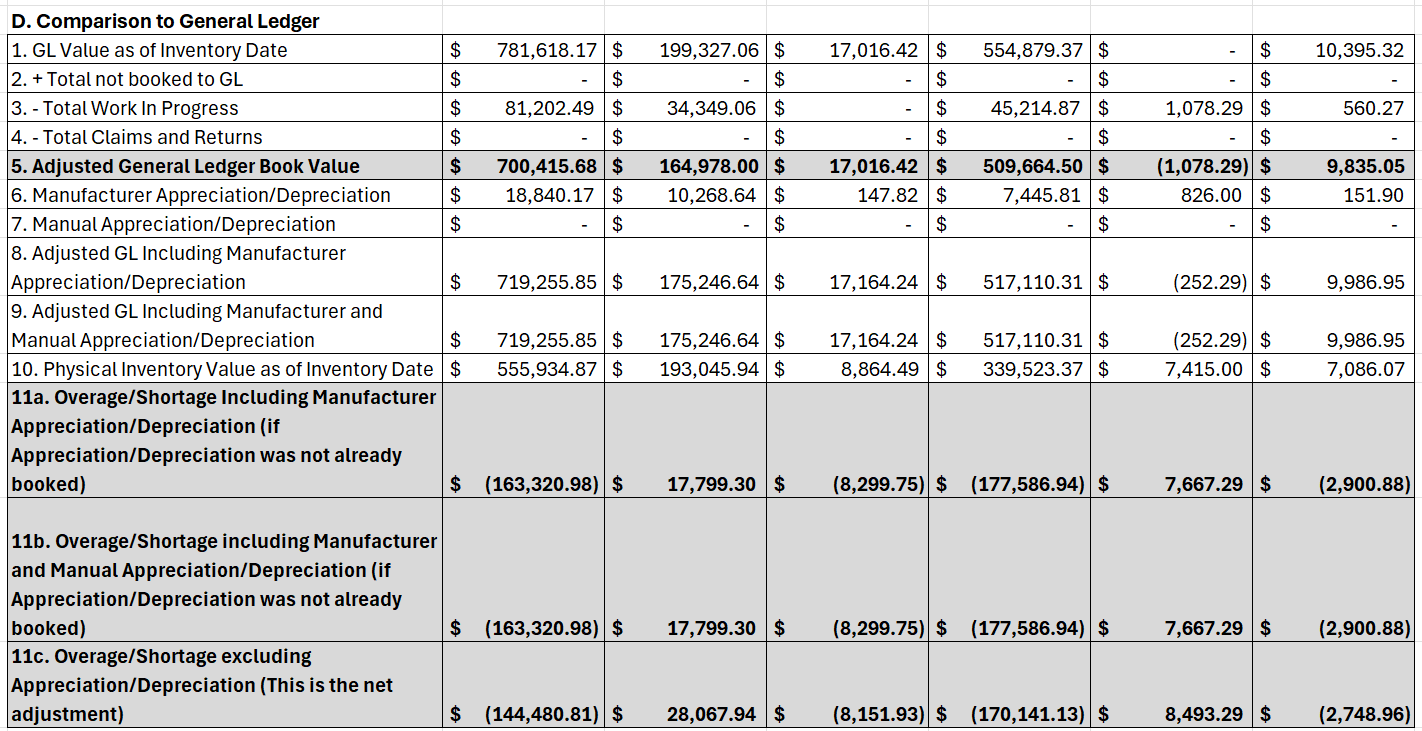
The biggest issue Payne sees: a lack of understanding about what the reconciliation process actually reveals.
One dealership had a $163,000 shortage on $550,000 in inventory. The manager’s solution? “Close more outstanding repair orders.”
“Right away, this told me that manager didn’t really fully understand what this report of the shortage meant,” Payne said. That $163,000 was coming off the dealership’s bottom line, thus its profit. The question was, did the shortage happen in the parts or the accounting department?
Parts doesn’t know much about accounting, and accounting doesn’t know much about parts, so there’s always a lot of finger-pointing.
Mark Payne, President and CEO of Total Dealer Solutions
One crucial item to help avoid such misunderstandings is to agree on a cutoff time, he said. The parts manager must know when to make the cutoff so items that haven’t been received into the PAD can be included in the reconciliation.
That’s why it’s critical to agree on cutoff dates and ensure both departments are looped in. Rosenfield added that his firm often encounters poor communication between parts and accounting. He recommends that accountants become familiar with parts reports and join regular parts department meetings.
Accounting doesn’t need to be experts in inventory—but understanding how parts move outside their system, like through plus-minus adjustments, helps close the gap.
Another challenge parts and accounting departments face is variance—both between the PAD count and the actual count during physical inventory, and between the PAD and accounting.
“If there are a lot of variances on the PAD, it means your on-hand quantities are wrong,” Payne said.
And that directly impacts revenue.
“It doesn’t line up, and part of the problem is because you’re dealing with batch accounting versus transactional accounting,” he added.
For example, a dealership may receive 100 line items in one order, but only one invoice is posted. If not every single item is entered correctly into the system, discrepancies can emerge.
While a 3% variance is often considered acceptable, Payne recommends aiming for zero variance as the true goal.
Another issue? Plus-minus adjustments. These can create confusion because the PAD can move independently of accounting. Payne shared a scenario where technicians inadvertently contribute to inventory errors:
Not because they’re stealing, but because they’ll come into the parts department while someone’s on the phone or busy at the counter, grab a part, and on the way out yell, ‘Oh, put it on RO 1234.’ No one hears it—and the part disappears.
Mark Payne, President and CEO of Total Dealer Solutions
Billing out the wrong part is another common slip. For instance, someone may bill a right-hand part when a left-hand part was used—the part numbers differ by just one digit, and the cost may be the same, but it still causes the inventory count to be off.
Incorrectly recording appreciation and depreciation is another major concern—especially as tariff-related price changes become more frequent and significant. Payne advised dealers to pull a full report on any price changes to manufacturer parts after the price tape is loaded into the system, ensuring the on-hand quantities at that time were correct. At the end of each month, dealers should review all appreciation and depreciation entries for accuracy and have the parts manager verify and sign off on the report.
Special orders are also prone to error. Payne emphasized the importance of understanding how your DMS handles them.
“They all have their own creative, wonderful ideas of how to deal with special orders—and there are only one or two that actually make sense,” he said.
Finally, some discrepancies may be caused by bugs in the DMS system itself.
Be sure someone is accountable for reconciling parts inventory—because, as Payne put it:
“If you don’t have accountability, that equals high vulnerability.”
Dealers need to treat parts inventory like cash. If someone handed you $600,000 to safeguard, you’d count every dollar. That same level of oversight and care should apply to parts.
You really have to get into the mindset, if you’re a parts manager, owner, or controller, that the parts equal cash.
Mark Payne, President and CEO of Total Dealer Solutions
If no one is held accountable, it creates an opportunity for fraud and theft—even if unintentional.
To close out the session, Rosenfield emphasized the importance of tracking both dollar and unit turn, ideally maintaining a 45-day supply. That target, however, should be flexible depending on factors like recalls, weather events, or other unique circumstances that may lead to a surge in parts inventory.
He also recommended dealerships:
Parts reconciliation isn’t just a monthly task—it’s a safeguard for your dealership’s bottom line. By fostering communication between departments, enforcing accountability, and making data-driven decisions, dealers can reduce vulnerability and take control of their inventory with confidence. As Payne emphasized, when you treat your parts department like the profit center it is, the payoff follows.
Catch the full recording of “What You Don’t Know can Hurt You: Closing the Gaps in Parts Reconciliation” and download the slide deck to explore the key concepts behind captive insurance and what it could mean for your dealership.
🎥 Watch the replay
📊 Download the slides
Have questions or want to talk it through? Contact a member of our team for questions and expert guidance.
Explore our full library of past webinars by visiting our Webinar Hub.