
A publication of the Auto CPA Group
www.autocpa.com | 1-800-4autocpa

Tasha Sinclair, CPA/ABV
Tetrick & Bartlett, PLLC
Leading publishers of Blue Sky multiples agree that buyers have shifted the application of Blue Sky multiples from historical adjusted profits of the last 12 months to a three-year average of adjusted profits as a predictor of future earnings. For 2022, this approach incorporates two out of three years of outperformance. The decreased supply of new vehicles resulting from the pandemic and other supply chain issues, coupled with strong consumer demand, has created the best environment for retailing new and used vehicles that we have encountered. Year-to-date 2022, we have seen new record profit months. But is this level of net profit truly sustainable for the long term considering the following current conditions?
✔ FTC New Safeguards Rule — Most substantive provisions of the new Safeguards Rule will go into effect December 9, 2022. NADA has estimated that compliance will average $293,000 for startup costs and another $275,000 for annual maintenance. For most dealers, this substantial cost cannot be fully offset by reductions in other areas.
✔ Interest Rate Increases — While most dealers are still turning over their inventories at a rapid pace, the interest rate increases already seen in —2022 and those expected to come— may not significantly impact floorplan interest expense. But what about the effect that interest rate increases have on consumers’ ability to purchase vehicles? Loan terms of 72 and 84 months have become more commonplace, and monthly payments are at an all-time high. If consumers are already at the maximum length and payment and interest rates available to the consumer rise, they will be forced to finance a lower amount. What impact will this have on dealers’ ability to maintain the exceptional turn ratios keeping interest expense down? What impact will this have on dealers’ gross and back-end profits?
✔ Inflation — In March 2022, the annual inflation rate in the United States was 8.5%, the highest since December 1981. With used cars being the component with the highest level of price inflation, car dealers have benefited from inflation. However, in April used-car prices declined from March 2022, marking the third straight month of declines from the first of the year. Experts expect used-car prices to continue to decline through the end of the year. Considering that quick turn ratio mentioned earlier, dealers may now start feeling the effects of the decline in their used inventory
values. Used write-downs may be stronger in 2022 than in pre-pandemic years, due to larger used-car inventories to offset the shortage in new cars. Compounding the dealers’ dilemma is that expenses are sure to increase as experts expect only a gradual ease in overall inflation.
So why raise the red flag on predicting future profits? The reason is two-fold. If you are a dealer looking to buy a dealership, you may want to consider these factors when projecting sustainable profits for the Blue Sky offer. In addition, now is the time to develop your contingency plan for when and if these factors start to impact your net profits. If you would like to discuss this further, please contact a member of the AutoCPAGroup. ✍
Daniel P. Thompson, CPA
Boyer & Ritter, LLC
We are frequently asked about ways dealers can save and make money. Over the last several months, one answer to both questions has been the same:
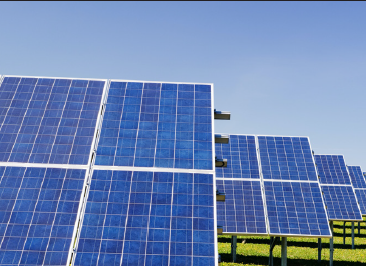
Consider solar. Here is why.
The climb in conventional energy prices has begun. Installing a solar array for your dealership allows you to generate your own electricity and hedge against future energy inflation.
Like most technology, with innovation comes price reduction. The cost of solar has plummeted over the last decade to a point at which significant future cost decreases are unlikely. The cost of panels has led the decrease in overall system cost, from $2.00/per watt in 2011 to just over $0.30/per watt in 2022.
Federal, state and utility incentives are available. A 26% federal Investment Tax Credit (ITC) is available for solar installations. This tax credit is currently scheduled to decrease to 22% in 2023, then to 10% in 2024, unless it is extended. Also, federal Rural Education Achievement Program (REAP) grants may be available to offset installation costs. In many states, Solar Renewable Energy Certificates (SREC) are available. In addition, some utilities are offering rebates for solar installation.
Projected financial returns can be substantial. A dealership can see significant first year returns on its investment due to the various credits and depreciation deductions available. After the initial return, energy savings will pay the debt service on the loan and still yield long term, typically single digit returns on the investment. Utilizing financing options, the dealer could expect the returns to be even higher.
The expected life of an array is 40 years. With no moving parts, solar panels come with a 30-year power production warranty that guarantees at least 80% of the panel’s rated output for 30 years, or the panel will be replaced free of charge. Thus, an array installed this year can protect a dealership from conventional energy inflation for up to 40 years.
Once installed, the cost of electricity from the system is fixed. Beyond the initial cost of the solar array, the only other future costs are minor maintenance and replacement of the inverter (converts solar energy into commercially usable energy) 20 years after the initial installation. Otherwise, a solar owner’s electricity costs
are fixed for the life of the system.
The marketing opportunities for dealerships can be significant. A dealer seeing increased customer interest in electric vehicles could gain a competitive advantage by advertising its solar generation, because those technologies are very connected. A dealer can gain competitive advantage by marketing environmental responsibility while keeping its energy cost below competitors.
Look beyond the horizon. Staying ahead of the competitive curve is what keeps businesses healthy. The costs of conventional energy are unlikely to escape inflation over the next 30 to 40 years, and a dealership controlling their energy costs can position itself for long-term sustainability.
Now is the time to explore how solar can mitigate your future energy costs. If you have questions on this or other opportunities for your dealership, consult your AutoCPAGroup member. ✍

Megan Condon
BDO USA, LLP
Dealers are navigating unprecedented market conditions, and most are experiencing a higher bottom line and healthier cash flow. Many dealers delayed investing in major capital improvements or significant purchases of personal property during the pandemic due to the volatile circumstances and concerns around potential shutdowns. Now that we’ve entered what most consider the post-pandemic era, dealers are in a position to put their working capital to good use.
As dealers contemplate significant capital improvement projects, such as a facility image upgrade or electric vehicle infrastructure, they should work with their tax advisors on how to maximize the tax benefit of placing these projects in service. Changes to the business interest expense limitation calculation for taxable years beginning after January 1, 2022, may have a substantial impact on the amount of depreciation expense immediately available for dealers when placing improvements in service.
As a refresher, the business interest expense limitation was introduced through the 2017 Tax Cuts and Jobs Act. A taxpayer’s business interest expense deduction is limited to the sum of business interest income, floorplan financing interest and 30% of adjusted taxable income (ATI). For taxable years beginning prior to January 1, 2022, depreciation, amortization and depletion were added back to taxable income when computing adjusted taxable income. Thus, accelerated depreciation has had no bearing on the deductible business interest expense. Beginning in 2022, ATI will include deductions for depreciation and amortization.
Most if not all dealerships use floorplan financing. For these dealers, an exception was created to allow them to fully deduct their floorplan interest expense if they are unable to do so when applying the standard 30% test. If the dealer can deduct all of their business interest expense without using the floorplan interest exception, bonus depreciation can be utilized. However, if a floor-planning dealer is unable to fully deduct their business interest expense (including floorplan interest) when applying the 30% test, bonus depreciation is unavailable for that taxable year. If a floor planning dealership makes a significant depreciable investment, they are now more likely to be limited on the availability of bonus depreciation beginning in 2022.
Despite these changes, one can maximize the tax benefits of capital improvements. If a related entity owns the real estate and the lease is structured to pay for and capitalize the improvements, it may be advantageous for that to happen. With no floorplan interest expense, they would be allowed to deduct bonus depreciation on eligible property. The real estate entity may experience a business interest limitation from the accelerated depreciation; however, the benefits may outweigh the limitation.
If the real estate is owned by an unrelated third party and the dealership capitalizes the improvements, there is still an opportunity to take advantage of accelerated depreciation but to a potentially lesser degree. Taxpayers can elect out of bonus depreciation by class of property, which means a taxpayer could potentially take bonus depreciation on 15-year property and elect out of bonus depreciation on 5- and 7-year property.
Also, don’t forget the Tangible Property Regulations (TPRs)! Depending on the scope of the project, a portion may be considered a “refresh” under rules that would treat it as a repair or maintenance expenditure, rather than a capital asset, a determination based on the facts and circumstances of the specific project.
While the changes to the business interest expense limitation may impact which entity capitalizes improvements or ultimately how much depreciation can be taken in year one, with proper tax planning there are ways to maximize the benefit.
Consult your AutoCPAGroup member for guidance in navigating tax strategies. ✍
Managing Editor
Anna M. Cooley, WPI e-Newsletters, Springfield, NJ
Associate Editor
Ken Gordon, Weisberg, Molé, Krantz & Goldfarb, LLP, Woodbury, NY
Advisory Board of CPAs
Justin Burchill
Brady Martz
Grand Forks, ND
Megan Condon
BDO USA, LLP
Seattle, WA
John Dobson
Thom-Dobson-Womack, Inc.
Oklahoma City, OK
Gerry Green
Green and Miller, PC
Corinth, TX
Barton Haag
Albin, Randall & Bennett, CPAs
Portland, ME
Susan Harwood
Hulsey, Harwood & Sheridan, LLC
Monroe, LA
Jeffrey Jensen
Jensen & Associates, P.C.
South Jordan, UT
Donald Kretschmar
Donald Kretschmar, CPA, PLLC
Tempe, AZ
Scott Lewis
Rosenfield & Co., PLLC
Orlando, FL
Dawn Moore
Spoor Bunch Franz
Tampa and St. Petersburg, FL
Jim Meade
Lattimore Black Morgan & Cain, PC
Brentwood, TN
Greg Porter
Porter & Company, P.C.
Greensboro, NC
Tasha R. Sinclair
Tetrick & Bartlett, PLLC
Clarksburg, WV
Jay Goldman
Boyer & Ritter, LLC
Harrisburg, PA
Scott Woodward
Woodward & Associates, Inc.
Bloomington, IL
Wayne Zimmerman
Pomares & Co., LLP
Sacramento, CA
For assistance, please call 1-800-4AUTOCPA or visit our website at www.autocpa.com. Headlights is prepared by the AutoCPAGroup for the clients of its members. We are required by IRS Circular 230 to inform you that the advice contained herein (including all attachments) is not intended or written to be used for the purpose of avoiding any penalties that may be imposed under federal tax law and cannot be used by you or any other taxpayer for the purpose of avoiding such penalties. ©2022 Headlights